
Frequently Asked Questions
What is a Blower Door Test?
A diagnostic tool used to measure the air tightness of a home.
Why do I need one?
Michigan Residential Code requires it but it is also to ensure your home is efficient and doesn’t have any significant leakage points.
When am I ready for a test?
Typically once the drywall is finished and all exterior doors are installed with hardware and sealed. However it can also be completed at the final stages of construction before the final occupancy inspection. For smaller homes, it is generally recommended to wait till closer to final occupancy.
How long does testing take?
Time completely depends on the complexity of the home, however anywhere from 45 min- 1 1/2 hours.
What should I do before testing?
Make sure all gaps and cracks are sealed with either sealant/caulking, tape, or spray foam.
Make sure any mechanical penetrations are completed and sealed.
Make sure home is sealed up with weather stripping.
Windows and doors installed, shut and locked.
Mechanical penetrations complete and foamed or caulked as needed.
Smaller houses can be a bit harder to pass at times, so making sure water is in the lines, trim is complete, and electrical outlet covers are all on can help the score.
What happens during the test?
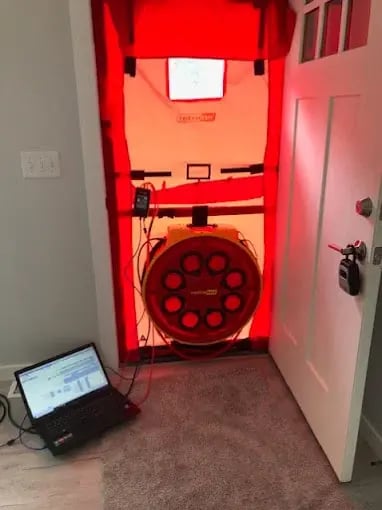
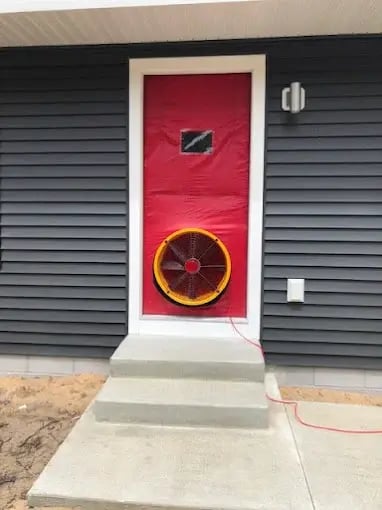
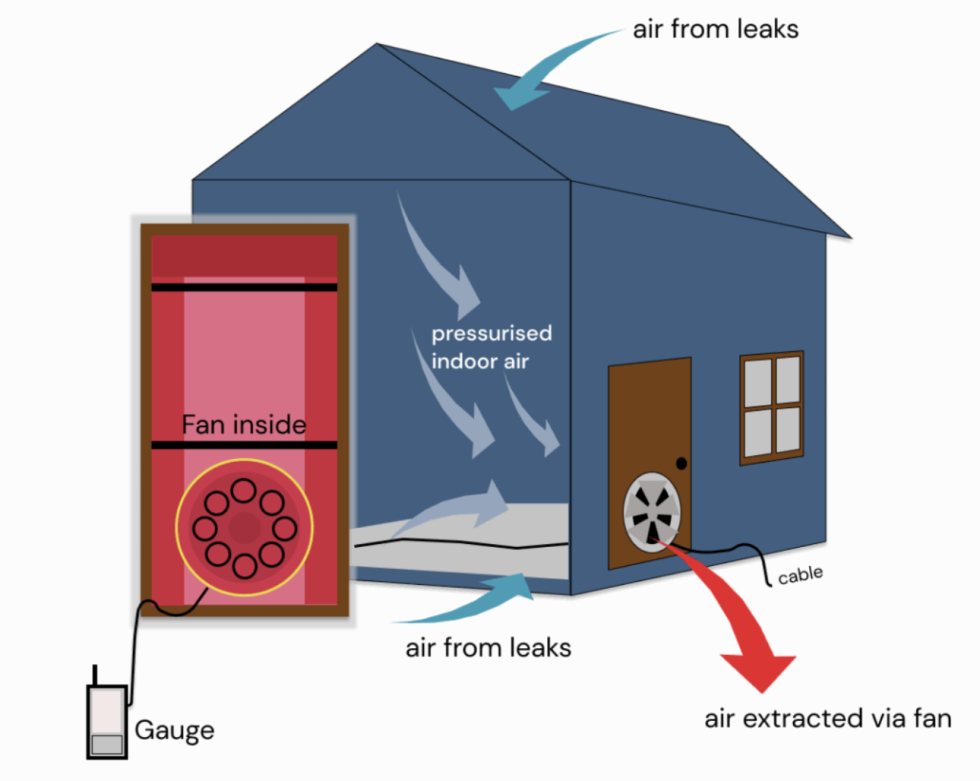
Exterior doors and windows are shut and locked to make sure the home is as sealed as possible. Then the home is depressurized using a blower door fan to pull in outside air through the gaps and cracks in the home.
What will I receive afterwards?
If the home receives a passing score a special sticker is placed on your electrical panel cover for the building inspector to see as well as a blower door report is sent to the local building department and homeowners email. If the house doesn't pass, we can make recommendations to get a passing score.
How much does testing cost?
Tests start at $275.00
Retests start at $150.00
What types of buildings can be tested?
All buildings can be tested. Most Michigan jurisdictions require testing to obtain occupancy.
What areas do you serve?
White Lake Energy North: Kent, Montcalm, Newaygo, Mecosta, Osceola, Lake, Mason, Manistee, Benzie, Wexford, Grand Traverse, Leelanau, Missaukee, Kalkaska, Clare.
White Lake Energy South: Oceana, Muskegon, Ottawa, Newaygo, Mason, will travel further for builders as needed.
Can you help explain my results?
Yes we can also help figure out where the leakage points are to help obtain a passing score.
Resource & Education
What is a Blower Door Test Continued.
A blower door is a powerful, variable-speed fan that can be temporarily mounted into an exterior door frame to provide controlled air flow for analysis. The way that air flows through a building can have a serious impact on air quality, comfort and energy expenses. The use of a blower door allows air flow through a structure, and the resulting loss of heat can be immediately quantified, providing a way to pinpoint the location of air leaks.
How Air Leakage Affects Your Home.
Air leakage can be costly short and long term if it’s not addressed properly. The leaks can cause the house to lose heat during the winter and cold air during the summer. This limits your furnace and air-conditioning's efficiency, driving up both your heating and electrical bills as a result.
Signs Your Home May Have Air Leaks.
Feeling drafts, especially during the colder months, and condensation/fog building up on windows/doors.
What Does Energy Efficiency Actually Mean?
Using less energy to get the same or better results.
Air Sealing vs. Insulation.
The blower door doesn’t rely on insulation type. It’s based on air sealing. Results are better with properly installed insulation, however, air sealing is the main objective to a good blower door score.
Preparing for an Energy Assessment.
Make sure home is sealed up with weather stripping.
Windows and doors properly installed, shut and locked.
Mechanical penetrations complete and foamed or caulked as needed.
Make sure water is in the lines, trim is complete, and electrical outlet covers are all on.
Common Energy Efficiency Misconceptions.
The more insulation in my attic, the more efficient my home will be.